Inside Our Vogue Living Feature: What a 10-Hectare Byron Hinterland Estate Taught Us About Building From Memory, Not a Mood Board
By Nicolas Lenders, Director, Skyline Projects
We're proud to have this project featured in Vogue Living — but the real story isn't the coverage, it's how the home came to be in the first place.
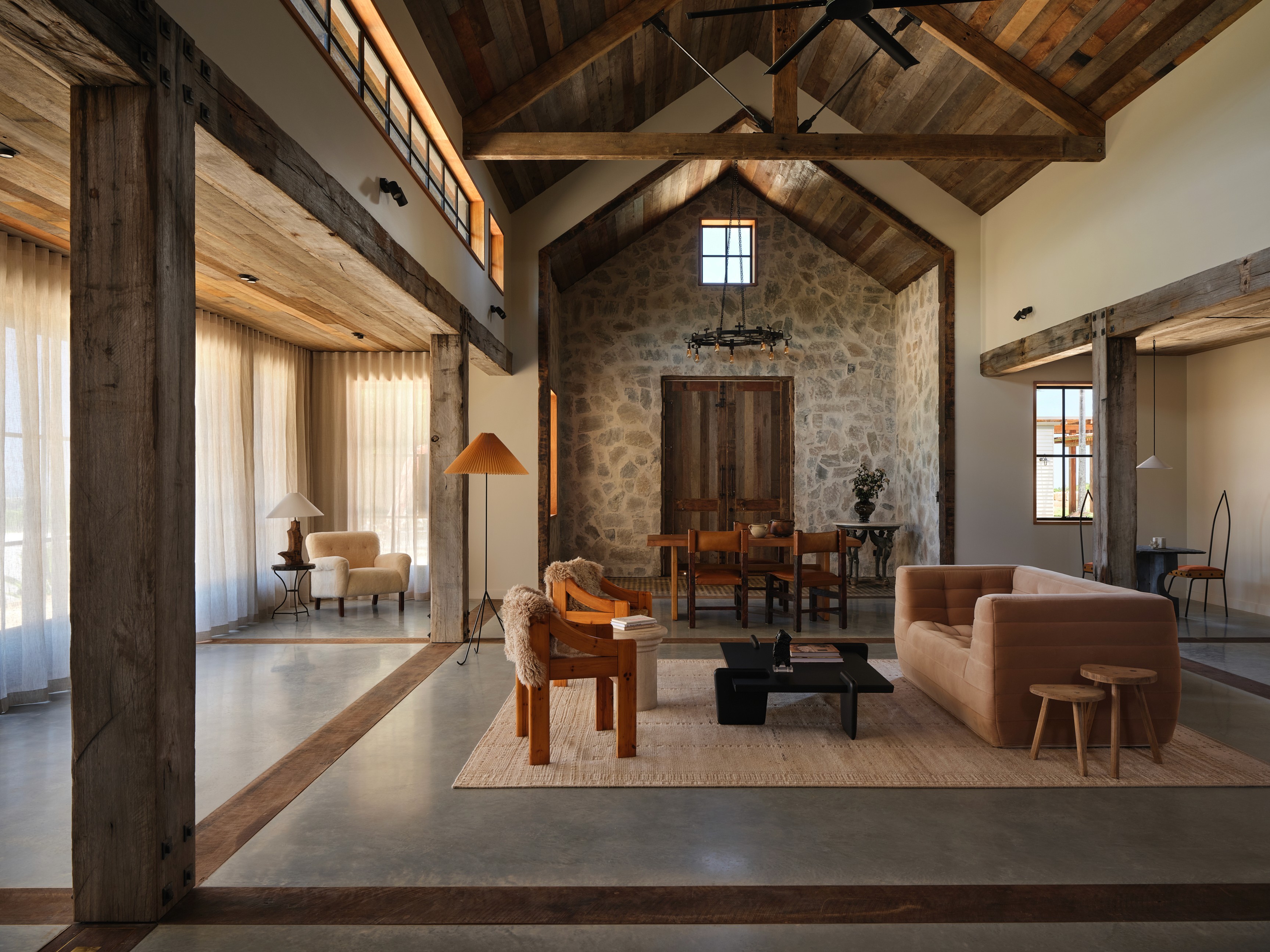
Our client Karen didn't come to us with a mood board. She came with three places she'd actually stood in — the rendered stone walls of a workshop in Spain, the hospitality of a home in Greece, and a machinery shed in New Zealand that did something clever with modern farmhouse lines and local stone. That was the brief. Not a trend. A memory.
If you take one thing from this before you build anything, take that. Build from what you've lived, not what's circulating on a feed somewhere. It's the difference between a house that feels like you, and one that feels like everyone else's Pinterest board with your furniture in it.
We spent the better part of three years turning that brief into a 10-hectare estate in the Byron hinterland, restoring the original 1920s Queenslander farmhouse. Here's what I'd want anyone building a home, at any scale, to know going in.
Respect what's already standing
This homestead had been extended twice before we got there, and neither addition talked to the original house — they just sat next to it. The first job on a renovation like this isn't drawing something new. It's understanding what's worth keeping, then making sure everything you add defers to it instead of competing with it. New roof, new windows built to match the original arches, a converted entry, a butler's pantry — all of it had to look like it had always belonged, not like it had been bolted on.
Old materials cost you twice — and they're worth it both times
We used 200-year-old reclaimed timber, recycled European tiles, large-section structural timber, and old stone. These materials are heavy, irregular, and genuinely difficult to work with. They demand specialist craftsmanship and more machinery, time and care than anything you'd order new. There's no shortcut through that. But sun-warmed stone and hand-finished timber give a house a sense of permanence that nothing off a shelf can fake. If permanence matters to you, budget for the difficulty — don't design around it.
Design for the room people actually live in
Karen told us plainly: the kitchen is the heart of the house, and she wanted it to feel like it had always been there. That's leathered Taj Mahal stone, original pressed-metal wall linings, vintage handmade tiles, and a wood fireplace — details that reward a second look, in the one room where the whole family actually gathers. Spend your attention where people spend their time. Everything else is secondary.
One material language, every building
This wasn't one house — it was a main residence, a gym, a barn, a pool house, a pottery studio, and a guest studio. Recycled timber ceilings, exposed-aggregate concrete, steel windows, old stone — we carried some materials into different structures to ensure continuity across the property. That's what makes ten buildings read as one estate instead of a scattered collection of projects. Consistency isn't a style choice. It's the thing that makes a big property feel considered instead of accumulated.
Scale is a logistics problem before it's a design problem
At peak, we had 30 to 40 tradespeople on site at once. That's not a number you plan for after the fact — it's a number that shapes your sequencing, your site management, and your timeline from day one. If your project is ambitious, respect the logistics as much as the design. They're the same job.
What we're actually proud of
It isn't any single room. It's that the finished estate looks exactly like what Karen described to us 5 years ago when we started designing — rendered stone from Spain, the warmth of a Greek home, a New Zealand barn, all of it sitting naturally in the Byron hinterland like it grew there. That's the job: take what someone has actually lived and loved, and build it so well it looks like it was always going to exist.
Interiors and furnishings by Tigmi. Styling by Ella McCabe Barton. Photography by Alicia Taylor. Full feature on Vogue Living.
Building something that needs to last? Talk to us. Nicolas 0414 185 011